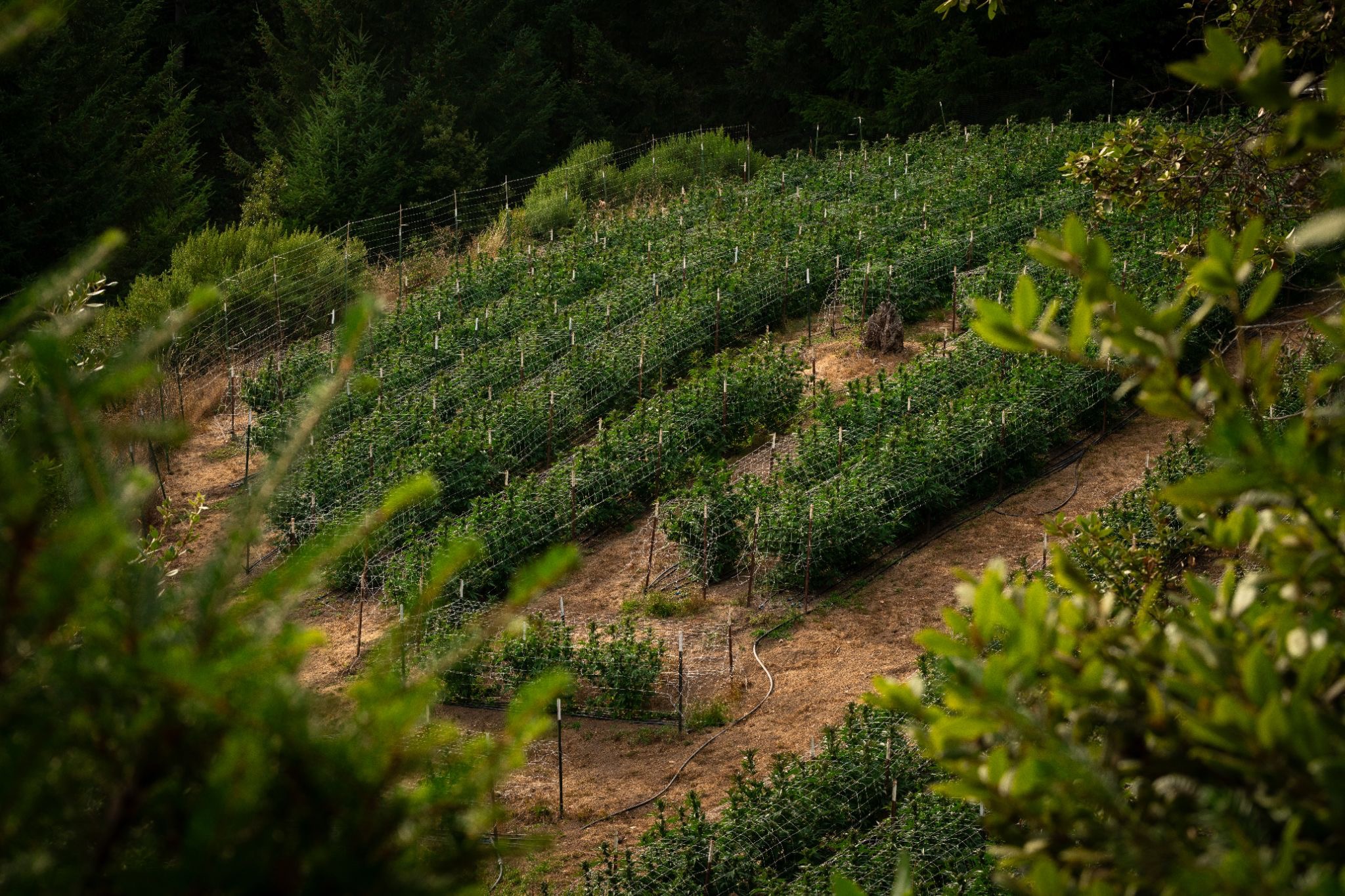
Humboldt County may be one of the most recognizable cannabis-growing regions. But for decades, many of the small farmers responsible for that reputation have struggled to capture the value of the name they helped build.
Humboldt Family Farms is trying to change that—and there is growing evidence that retailers and consumers are responding.
Today, Humboldt Family Farms has built a growing retail presence across California, connecting independent Humboldt farms to consumers through packaging, sales, marketing, distribution, cultural integrations and retail support.
Humboldt Family Farms is proving what can happen when sungrown cannabis is treated as a category worth explaining rather than simply a lower-priced alternative to indoor flower.
During a campaign with Embarc and SURFER Magazine, sungrown flower and pre-rolls grew from 4% of sales in June to 12% in August across Embarc stores.
That result speaks to something bigger than a single successful campaign.
The problem may not be that California consumers don't want sungrown cannabis. The problem may be that much of the industry has not given them a reason to understand it.
Building a Category, Not Just Selling Flower
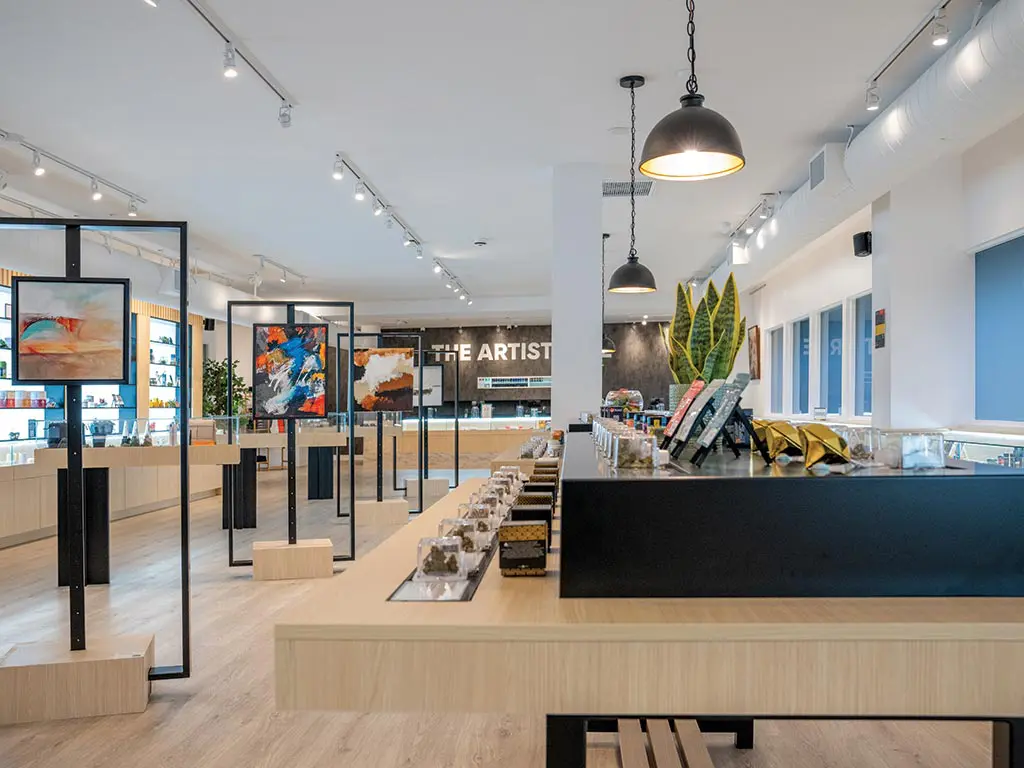
Walk into a California dispensary and cannabis is still largely presented through potency, price, strain name, package design, and whether the flower was grown indoor or outdoor.
That leaves an enormous amount of information out of the conversation.
Where was it grown? Who grew it? How long has that family been farming? What genetics are being preserved? How was the land treated? What does the purchase actually support?
Those questions are familiar in wine, coffee, food, and other agricultural categories. Humboldt Family Farms believes cannabis should be no different.
Its partner farms cultivate under natural sunlight, operate at relatively small scales, and include growers who use regenerative agriculture, native soils, closed-loop composting, beneficial insects, dry-farming techniques, and other practices developed over years of working the same land.
The collective also works with genetics that don't necessarily follow whatever's trending on the menu that month.
Maui Waui. Blue Dream. Train Wreck. Galaxy OG. Sapphire Tsu. Wildberry Pie. Salted Caramel. Hawaiian Fanta.
.jpeg)
Some have histories stretching back years on the farms that continue to grow them.
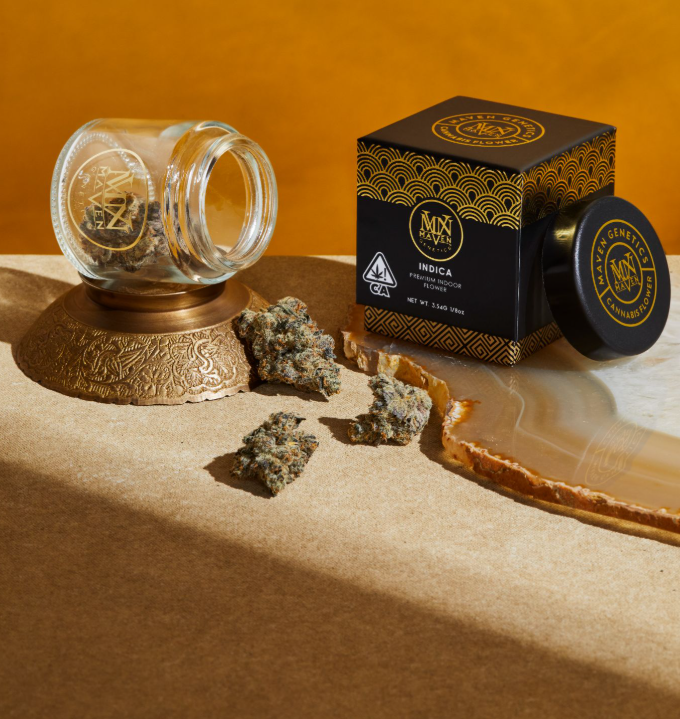
For a retailer, this creates another way to merchandise cannabis. Instead of competing exclusively around THC and price, the conversation can include provenance, genetics, farming practices, sustainability, regional identity, and the people responsible for the flower.
And when HFF has put those ideas in front of consumers, they have translated into sales.
From 4% to 12%
In 2025 and 2026, Humboldt Family Farms worked with Embarc and SURFER Magazine on a “surf and sungrown” campaign built around the natural overlap between California surf culture and Humboldt agriculture.
The collaboration included Maui Waui flower and pre-rolls, with pre-roll tubes made using reclaimed ocean plastic. It also resulted in the first cannabis advertisement to appear in SURFER Magazine's 65-year history.
The cultural connection was easy to understand: independence, outdoor life, California heritage, and respect for the natural environment.
But the retail result is what made the campaign especially significant.
Across Embarc stores, sungrown flower and pre-rolls increased from 4% of sales in June to 12% in August.
Consumers didn't suddenly discover sunlight.
The products were given context.
That distinction matters for retailers because sungrown has often been merchandised primarily through value. Once price becomes the defining characteristic of a category, it becomes difficult for growers or retailers to build much equity around it.
HFF is testing a different proposition: give sungrown an identity, explain why Humboldt matters, introduce customers to the farmers, and connect the product to communities where those values already make sense.
SURFER is one example. HFF has also worked with POWDER Magazine and participated in events including the Dead & Company 60th Anniversary, Outside Lands, Cali Roots, and the California State Fair.
The objective isn't celebrity adjacency. It's finding places where the people, product, and culture have a legitimate connection.
Humboldt's Name Has Value. Most Farmers Never Capture It.
This is the problem at the center of Humboldt Family Farms.
Humboldt County spent decades becoming synonymous with cannabis, yet much of the cannabis grown there eventually reaches consumers without the identity of the individual farm attached to it.
The region creates value. The farmer creates value. But somewhere between cultivation and the retail shelf, much of that identity can disappear.
HFF founder Scott Vasterling saw an opportunity to build infrastructure around the farms without absorbing them.
The idea was straightforward: “To provide small craft family farmers a platform to get them to retail with efficiency and scale.”
Instead of asking every small farmer to independently build a sales organization, marketing department, packaging operation, testing program, distribution network, and statewide retail relationships, HFF provides those functions collectively.
The farmers remain farmers.
They stay independent. They stay on their land. And importantly, their identities don't have to disappear when their cannabis leaves Humboldt.
For retailers, that means the name on the package can lead somewhere real.
The Farms Behind the Flower
Full Moon Farms
Nik Erickson has farmed in Humboldt County since 1993.
Today he operates three grow sites along Highway 36 near Mad River, with each property influenced by its own elevation, weather, and microclimate.
.jpeg)
Vasterling describes him simply: “Nik represents the true Humboldt farmer: family-run, sungrown, and craft-first.”
In spring 2025, an ATV accident tore through Erickson's hip just as the cultivation season was beginning. His partner, Darien, and the farm crew kept the operation moving while he recovered.
By midsummer, Erickson was back on his feet.
Today, Full Moon flower reaches dispensary shelves throughout California through Humboldt Family Farms, without requiring Full Moon to give up the identity it spent decades building.
As Erickson puts it: “You get to stay on your land and keep your name. That's the whole point.”
Neukom Family Farm
Jacques Neukom began farming along the Trinity River near Willow Creek in 1996 with an 81-tree orchard.
.jpeg)
Today, Jacques and Amy Neukom manage more than 1,600 fruit trees, including 18 varieties of peaches and 15 types of pluots.
Their cannabis operation?
Approximately 5,000 square feet.
“We want it to be a part of our farm,” Amy said, “but not our entire reality.”
That distinction says a lot about what small-scale Humboldt agriculture actually looks like.
Neukom Family Farm is Sun+Earth Certified and CCOF Certified Organic. The family works with native no-till soil, closed-loop composting, dry-farming practices, and beneficial insects rather than relying on conventional chemical inputs.
Its Sapphire Tsu has also become the foundation for one of HFF's collaborative pre-roll offerings.
The Neukoms have watched the perception of their livelihood change around them.
Years ago, some local families kept their distance because the Neukoms grew cannabis. By the time their daughter graduated, some of those same parents were telling their children that if they were going to smoke cannabis, they should smoke flower grown by the Neukoms.
That isn't a marketing campaign.
It's what happens when people know who grows their cannabis.
What HFF Gives Retailers
That relationship between farm and consumer is difficult to recreate once cannabis becomes anonymous.
It is also where Humboldt Family Farms believes it can offer retailers something useful.
HFF gives buyers access to independent Humboldt farms through a single platform, rather than requiring them to build individual relationships with dozens of small cultivators.
That platform brings together recognizable Humboldt origin, documented farm histories, regenerative and certified cultivation partners, distinctive genetics, statewide distribution, retail education, marketing support, and cultural collaborations.
The result isn't simply another collection of SKUs.
A retailer can use HFF to build out a sungrown category, introduce customers to Humboldt agriculture, train staff on cultivation and provenance, support sustainability initiatives, and offer products in which the farmer's identity remains part of what is being sold.
The 4% to 12% growth at Embarc suggests there is commercial potential when those pieces work together.
Why This Matters Now
The timing is important because the small-farm community that built Humboldt's cannabis reputation has been shrinking.
.jpeg)
Legalization didn't simply open a door to a larger market. It brought regulatory expenses, compliance requirements, taxation, volatile wholesale pricing, and a retail system that can be extraordinarily difficult for small independent cultivators to access.
Scale tends to solve those problems.
But scale can also erase exactly what made Humboldt valuable in the first place.
HFF's answer has been to scale the infrastructure rather than the farms.
Packaging can scale. Distribution can scale. Sales can scale. Marketing can scale.
The individual farm doesn't necessarily have to.
That distinction allows a farmer like Nik Erickson or the Neukom family to remain relatively small while participating in a statewide market that increasingly rewards size and operational efficiency.
It also gives retailers a direct way to support those farms without sacrificing the logistical simplicity required to run a modern cannabis business.
How Humboldt Family Farms Got Here
Humboldt Family Farms didn't begin as an attempt to manufacture a new identity for Humboldt cannabis.
The identity already existed.
The challenge was figuring out how to preserve it through legalization.
Vasterling's experience before entering cannabis included time around brands such as Guayakí, Patagonia, and The North Face—companies that demonstrated how provenance, values, community, and product can reinforce one another when the connection is legitimate.
After moving to Humboldt and becoming part of a cannabis-farming family, he encountered a very different business reality.
Small farms could grow exceptional cannabis yet lack the resources to package, market, distribute, build retailer relationships, and compete with substantially larger operators.
Humboldt Family Farms developed around that gap.
Over time, the collective expanded its farm network, retail presence, product portfolio, distribution capabilities, and cultural partnerships while keeping the original premise intact: the platform should serve the farms rather than replace them.
What Comes Next
Following the 2026 California State Fair, Humboldt Family Farms is continuing to expand its presence throughout California.
That includes deeper retail partnerships, broader access to its sungrown portfolio, and additional collaborations across art, music, food, outdoor culture, and other communities where Humboldt's agricultural identity has relevance.
But expansion creates its own test.
The opportunity isn't simply to put Humboldt Family Farms into more dispensaries.
It's to prove that California can build a meaningful craft sungrown category—and that the farmers who gave Humboldt its name can participate in the economic value of that category.
For decades, Humboldt farmers helped make the county famous.
The next chapter is making sure consumers know who they are.
Shop Humboldt Family Farms on Nabis Marketplace.
.png)
.jpeg)